My Work
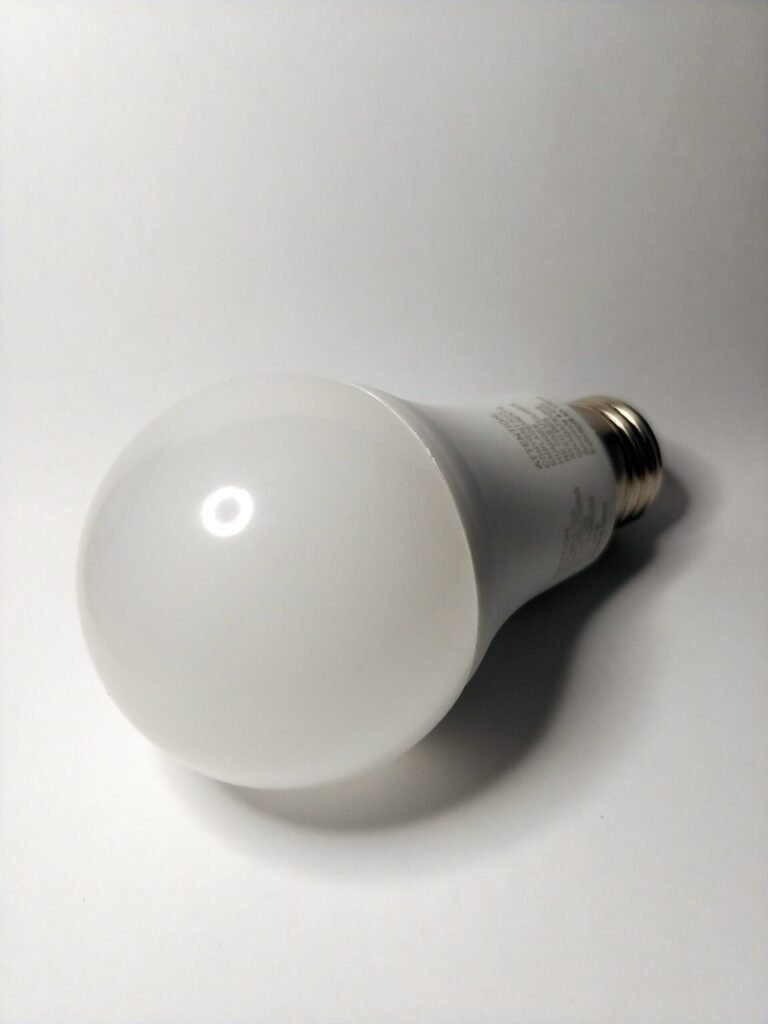
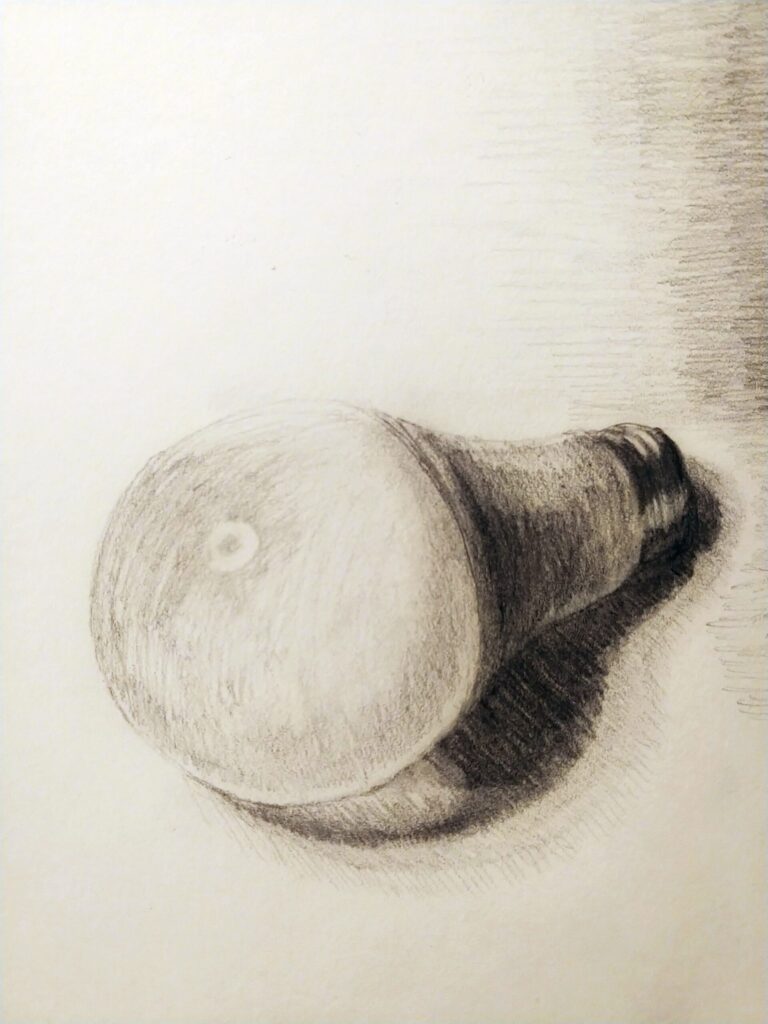
The shading method I used was contour-hatching. I used a 2B pencil for the initial sketch, as well as for the lighter shadows of the object. For the darker shadows, I used a 4B pencil. Then, I used a 6B pencil for the really dark and small details.
Stop and Think
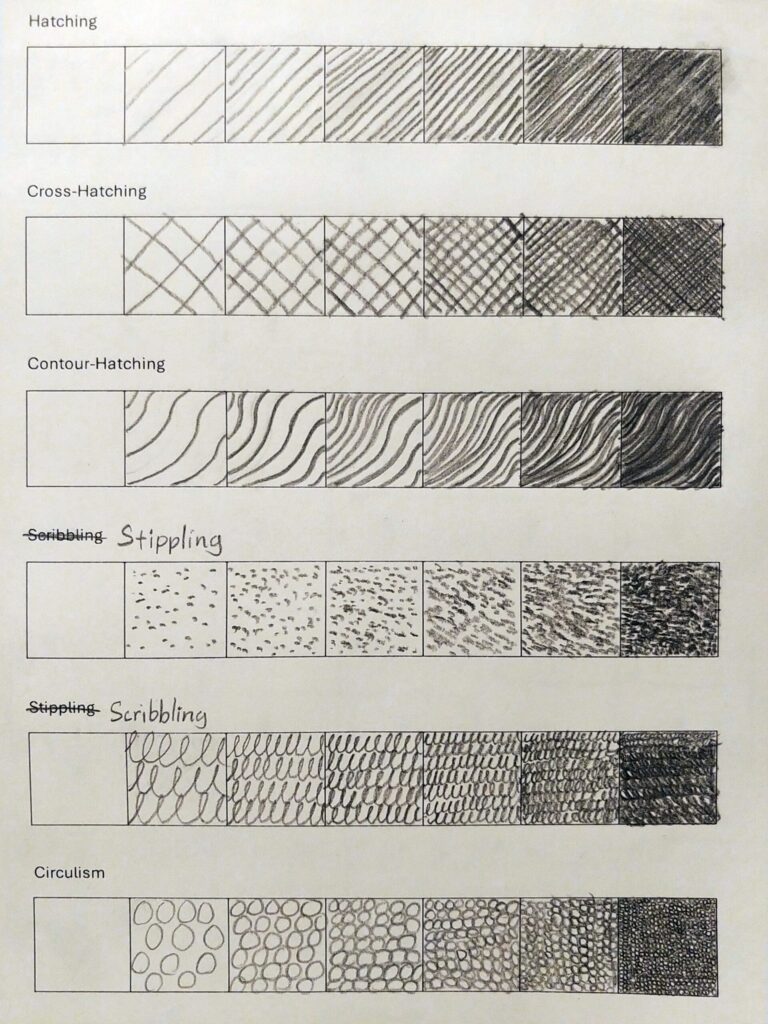
For each technique, the pressure applied to the pencil and the amount of marks made in an area will affect the value. Create a value scale of seven different shades for each of the shading methods in the lesson. You can choose to do this after each section or all at the end. Feel free to use the attached template or create you own.
1. Hatching
2. Cross-Hatching
3. Contour-Hatching
4. Scribbling
5. Stippling
6. Circulism
Artist Connection
After viewing Da Vinci’s drawings and considering his use of simplicity and exaggeration, sketch an animal in his style.
– Before starting, decide what important part you want to emphasize. Use simplicity: draw the most detail for the important part and less detail the farther away you get. Use exaggeration: create sharp lines and use dark values to highlight that part.
– Write a short artist’s statement (four to six sentences) describing your choices and how you completed your sketch.
You do not have to choose the head of the animal as the focal point. Be creative! (Some ideas: moose antler, peacock tail, butterfly wing, elephant tusk, frog eyes…)
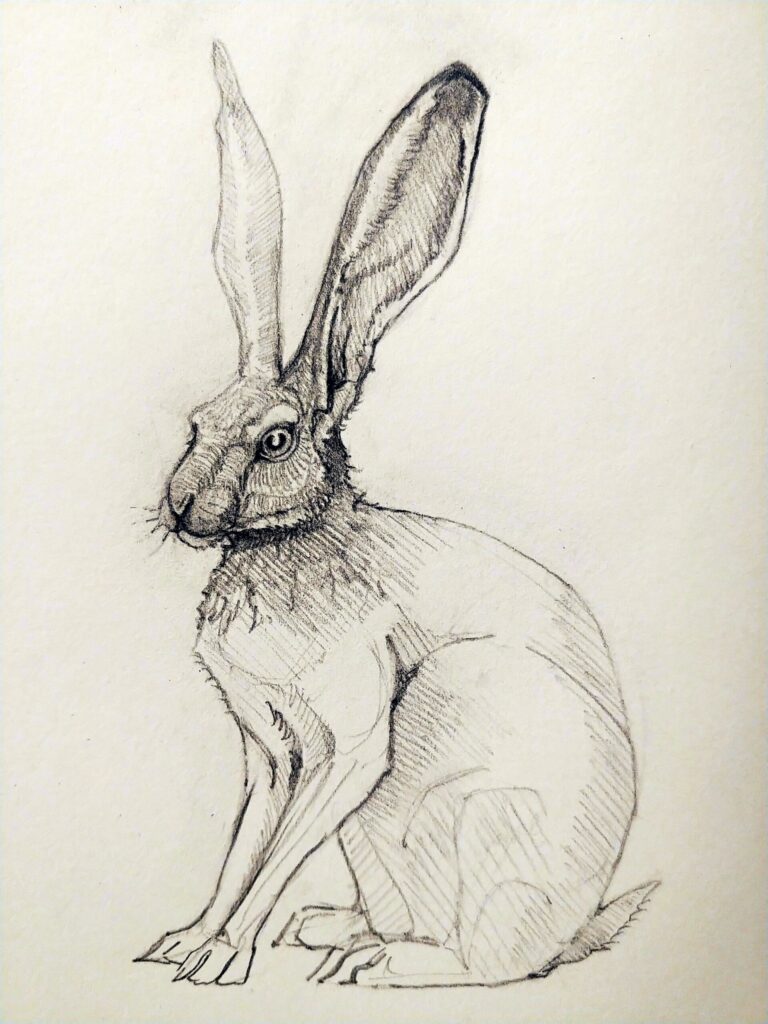
My jackrabbit sketch is inspired by Leonardo da Vinci’s detailed and lifelike drawings. I chose to emphasize one of the jackrabbit’s ears, which is closest to the viewer, by adding the most detail to that part, as well as its head. I used fine lines and some shading for the rest of its body. Then, I exaggerated certain parts of the jackrabbit that capture the most of its vigilant nature by using sharp lines and dark values.