My Work
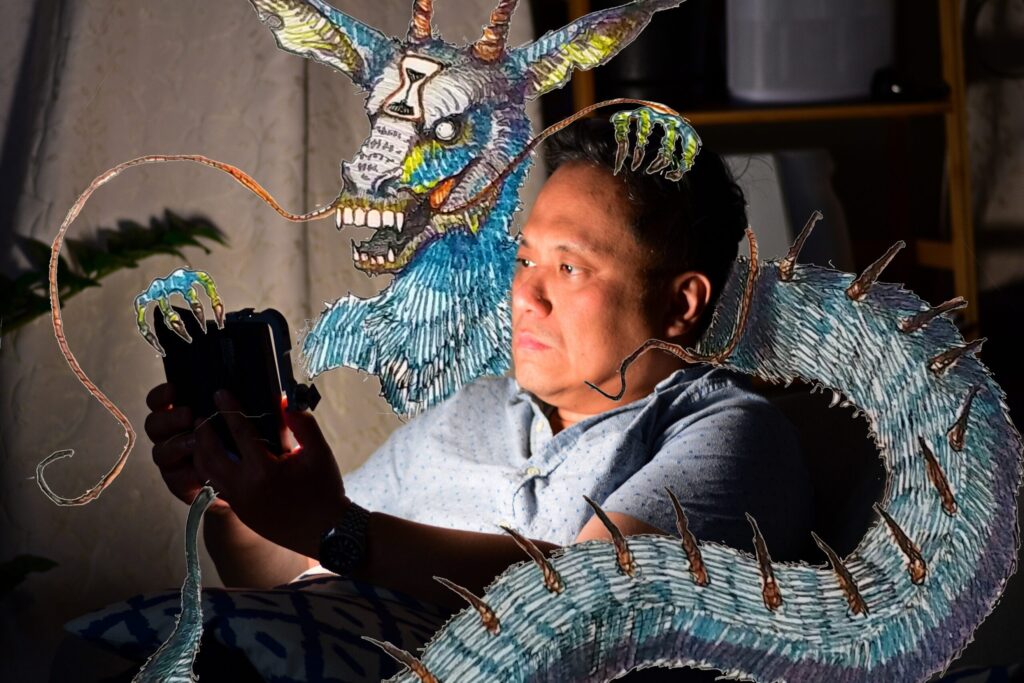
I drew this phone monster on watercolour paper using ink and markers. Then, I used Pixlr Express to edit the drawing onto a photo of my dad using his phone. The monster resembles a dragon-like creature that has a long body and a goat’s head. The hourglass on its forehead symbolizes the excessive amount of time spent on electronic devices. It easily tricks people into losing track of their time by distracting them with all sorts of digital entertainment. Bit by bit, it feeds on the precious time they waste on mindless scrolling, watching, playing, etc.
Stop and Think
This short article looks at Goya’s artistic development over his life. (Note: One of these works contains nudity. Please contact your teacher if this is a concern.)
Understanding Francisco de Goya through 6 Pivotal Artworks | Artsy
Choose one of the following prompts to think about and write a paragraph response.
* Compare Goya’s work to contemporary artists. What similarities can you pick out? How do you think that Goya’s works can still shock modern audiences?
* Based on the six pieces in the article, choose where you would divide Goya’s work into before/after. Defend your decision based on what you see in the artwork.
* The Romantic Period was close to the time when the literary subgenre of Gothic Horror stories emerged, including:
– Frankenstein (1818) by Mary Wollstonecraft Shelley
– The Fall of the House of Usher (1839) by Edgar Allen Poe
– The Strange Case of Doctor Jekyll & Mr. Hyde (1886) Robert Louis Stevenson
– Dracula (1897) by Bram Stoker
These stories focused on ideas of morality, philosophy, and religion. The villains were often metaphors for human temptation.
Based on your observations and understanding of Goya’s work, how would this literature fit in with his artwork?
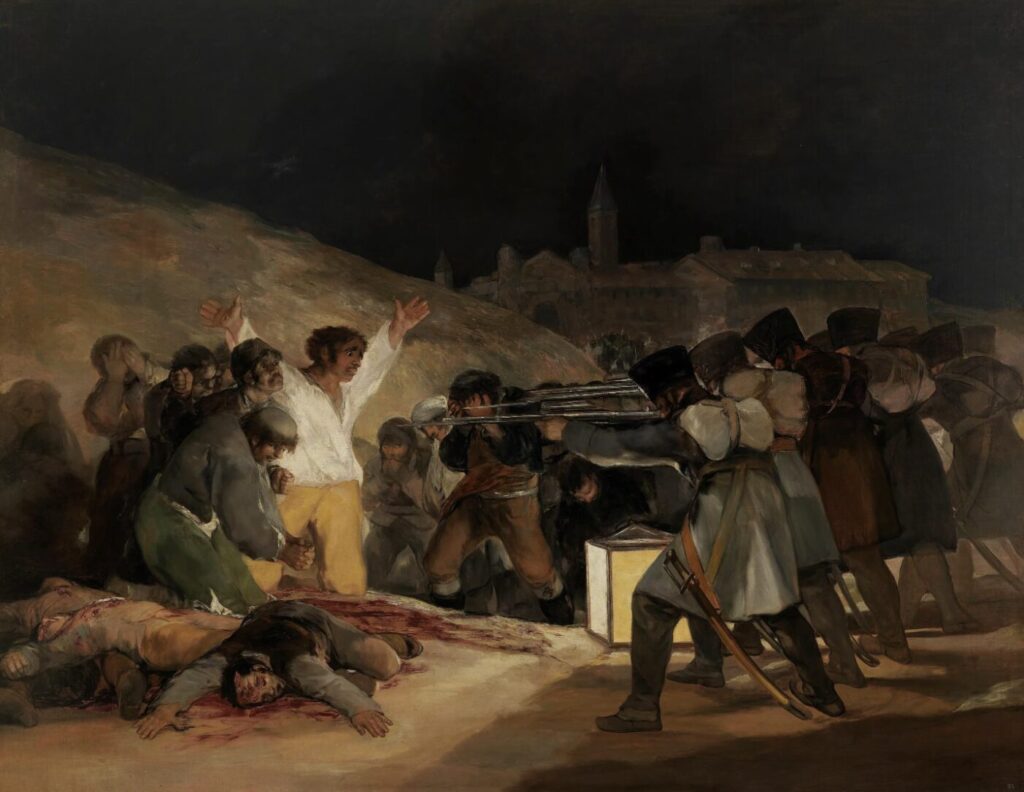
Image Source: Understanding Francisco de Goya through 6 Pivotal Artworks | Artsy
I chose the first prompt.
Goya’s paintings are still important in modern art and relevant to people today. His works even influenced contemporary artists, such as Pablo Picasso. Both artists used their paintings to depict the horrors of humanity and other unsettling themes. Picasso’s painting of “Guernica” has a few similarities to Goya’s painting of “The Third of May”, which reveal the disasters of war during their time. One reason why Goya’s works can still shock modern audiences is how he captured the raw emotion of his subjects, often showing violence and despair. Another reason is his style of blending beautiful and grotesque elements that leave a strong impression on anyone who sees his paintings. In conclusion, Goya’s work continues to play a major role in art today by his unique paintings and interesting style.
Sources:
– Goya and Picasso: humanity and horror | TheArticle
– Understanding Francisco de Goya through 6 Pivotal Artworks | Artsy
Artist Connection
Create a monster based on an inkblot (or other randomly created blot). Ways that you can create your blot, if you do not have access to ink:
– Coffee grounds or tea bag
– Food colouring
– Splatter of paint
– Leaky pen (if it isn’t fixable, open it up and dump a little of the ink out—carefully!)
– Anything else you can think of
Once you have your blot, turn it around a few times, deciding how you will turn it into a monster. Use pencil, then ink or marker to design a monster, using the blot as part of its body (it can be anything!). When you post to your website, write a few sentences that describe your monster (what is it doing, what is it feeling, personality traits, emotions, etc.).
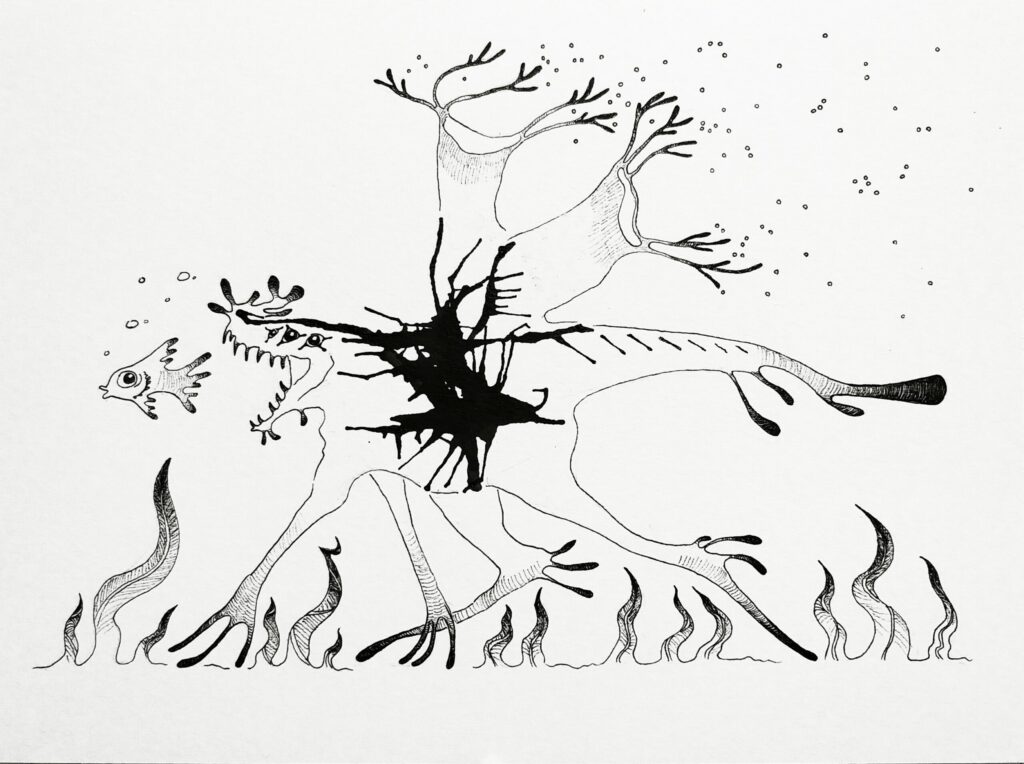
This inkblot monster lives in the sea where the algae and fish are prolific. It has long legs that allow it to traverse the seabed and chase after its prey. The appendages on its back are similar to sea anemones, which have venomous tentacles that protect it from other predators. The monster is a social creature and enjoys walking across the seabed, spending most of its time exploring new areas.